Nilakkalohi, Paras Aqua and Fennoaqua: Investment and innovation that benefit fish and the environment
Nilakkalohi is the first company in Finland to implement a new partial recirculation system for aquaculture, developed by Paras Aqua. Fennoaqua, Nilakkalohi, and Paras Aqua are further developing feed based on Fennoaqua’s Circuit feeds to better align with the new farming concept and environmental standards.
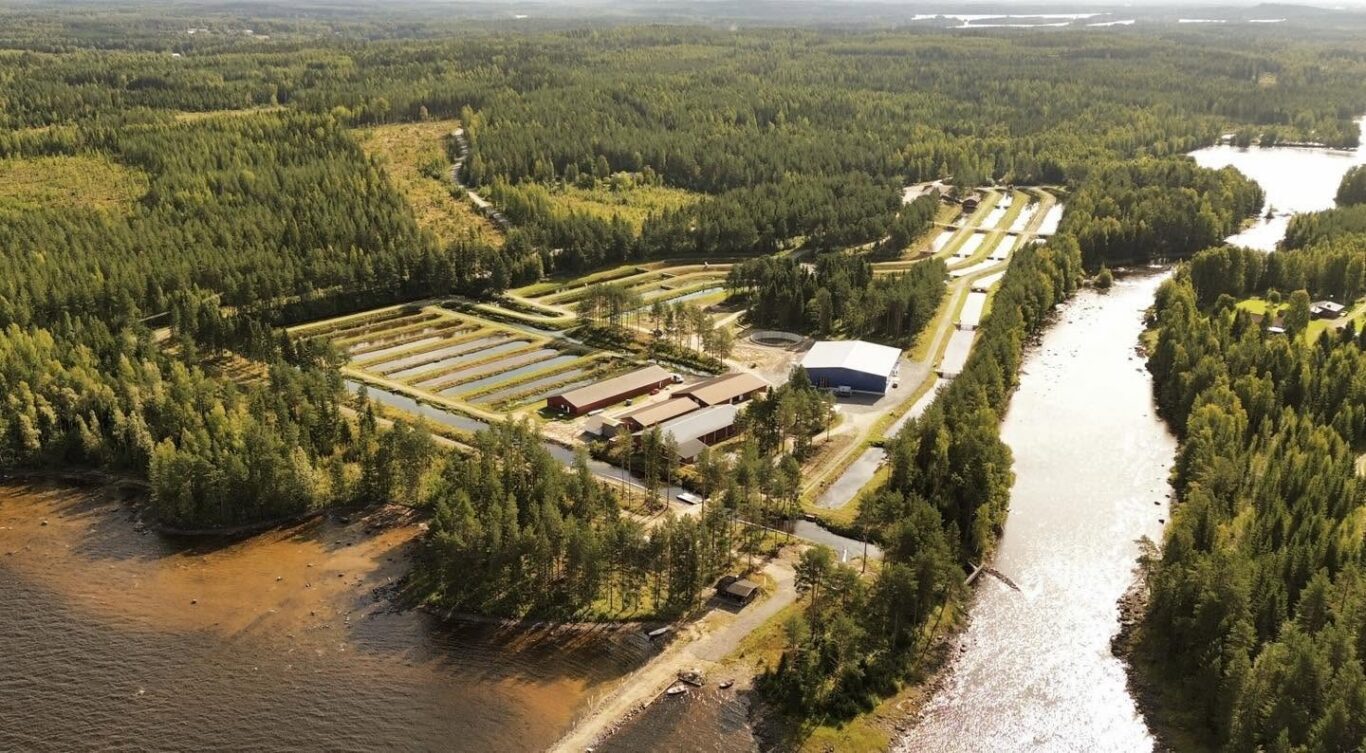
Nilakkalohi fish farm in Tervo. Photo: Santtu Latikka
Nilakkalohi, specialising in rainbow trout smolt, opened a facility in Tervo at the end of 2025 that uses Precision HFS technology developed by Paras Aqua. This concept enables efficient water use, cost-effective water temperature regulation, and precise water-quality control, all of which improve fish welfare. The technology was designed to create a more profitable and environmentally friendly fish farming method while ensuring optimal animal welfare.
For more information about Paras Aqua and its concept, please visit the company’s website: parasaqua.com
Responsibility drives Nilakkalohi
Responsibility was a key factor in Nilakkalohi’s decision to invest in the new partial recirculation system.
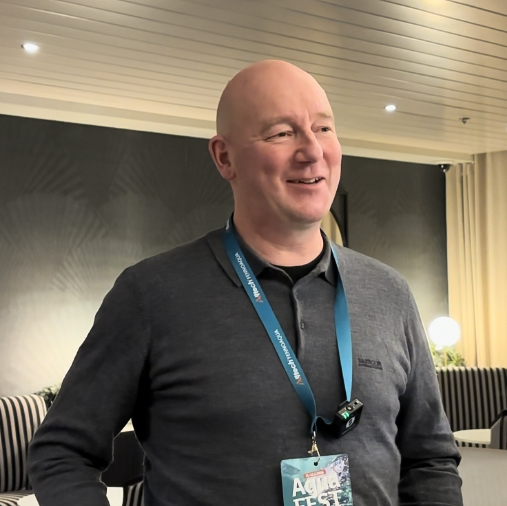
“The Paras Aqua technology was the most suitable option for us to develop our operations in an environmentally friendly way. At the same time, we can do our bit to safeguard the security of supply for Finnish food production. Offshore farms, which are extremely important for the development of domestic fish production, require larger smolts than before, and the new facility is ideal for producing them,” says Pietari Puranen, Managing Director of Nilakkalohi.
The new Tervo facility contains 10 tanks, primarily for farming rainbow trout. They have also farmed brown trout experimentally in one tank. Annual production is approximately 250 tonnes.
Low-maintenance, year-round and environmentally friendly
Daily operations at the new facility are straightforward given the fish volume, compared with river channels and traditional indoor systems. All processes, including feeding, are largely automated.
“The Paras production unit is compact. All operations for an annual production of 250 tonnes are conducted within just over 1,000 square metres. In contrast, our traditional flow-through facility spread across halls and channels requires approximately 13 hectares for the same volume,” Puranen explains.
The new facility enables year-round farming, which brings flexibility to fish handling: sorting and vaccinations can be carried out continuously, regardless of conditions. Furthermore, during the first summer, when the channels suffered a water shortage, the new facility made it possible to keep some fish under controlled conditions.
The facility’s environmental benefits are already becoming evident.
“Based on the initial samples, it appears that phosphorus, for example, is being recovered even more efficiently than might have been expected from the trials carried out at the facilities of the Natural Resources Institute Finland in Laukaa,” Puranen says.
Partial recirculation feeds as a joint project
Feeds used in recirculating aquaculture systems, such as Fennoaqua’s Circuit feeds, suit the new Paras fish farms. Fennoaqua also sought to develop feeds tailored to the Paras concept’s requirements, with R&D conducted in collaboration with Paras Aqua and Nilakkalohi.
“Right from the very first meeting, we realised that the basic principles of our feeds also serve the Paras concept: top-class, highly digestible raw materials, uncompromising nutritional standards, functionality that supports welfare, and additives that modify faecal composition – in other words, solutions that support good farming results in practice,” explains Fennoaqua’s CEO Tomi Kantola.
At Fennoaqua, Development Manager Susanna Airaksinen led the recipe development with the R&D department. This work will continue throughout the trial period.
“We are prepared to make changes to the formulations for as long as it takes to ensure they actually work and serve the new farming method and the farm owners, but above all, the fish in the best possible way,” Kantola assures.
Paras Aqua innovates with fish welfare and the environment as top priorities
“Paras Aqua’s technology is geared towards environmental sustainability, and this is a key motivator and a prerequisite for growth at Nilakkalohi as well. That is why, when designing the partial recirculation feeds, the feed is optimised based on both the fish’s needs and the direct impact of the feed on water quality,” says Paras Aqua’s Chief Technology Officer Tapio Kiuru.
Fennoaqua’s Baltic Blend, a feed formulated for the Baltic Sea that reduces, among other things, nitrogen and phosphorus loads in the Baltic Sea, has previously attracted Paras Aqua’s interest.
“The aim of our current joint project has been nutrient recycling, and in this respect, raw materials from the Baltic Sea and clean raw materials are of interest. When environmentally friendly fish farming technology is used, along with fishmeal made from fish caught in the Baltic Sea as a feed ingredient, inland fish farming can act as a net nutrient remover from the perspective of the Baltic Sea. New technologies and feed development thus support one another,” Kiuru summarises.
“Development projects always require resources, but everything new drives the industry, feed development and our expertise forward. That is why this development project, too, has already been and will continue to be worthwhile in these respects. Even at this stage, we would like to thank both Nilakkalohi and the Paras team for their trust in allowing us to be part of creating something completely new,” Kantola concludes.