Our partner Honkajoki Oy turns by-products into valuable resources
Reducing our carbon footprint is central to our sustainability goals. For this reason, we utilise domestic food production by-products. For years, Honkajoki Oy, a leader in the Finnish circular economy, has been our primary supplier of poultry-based raw materials for feed.
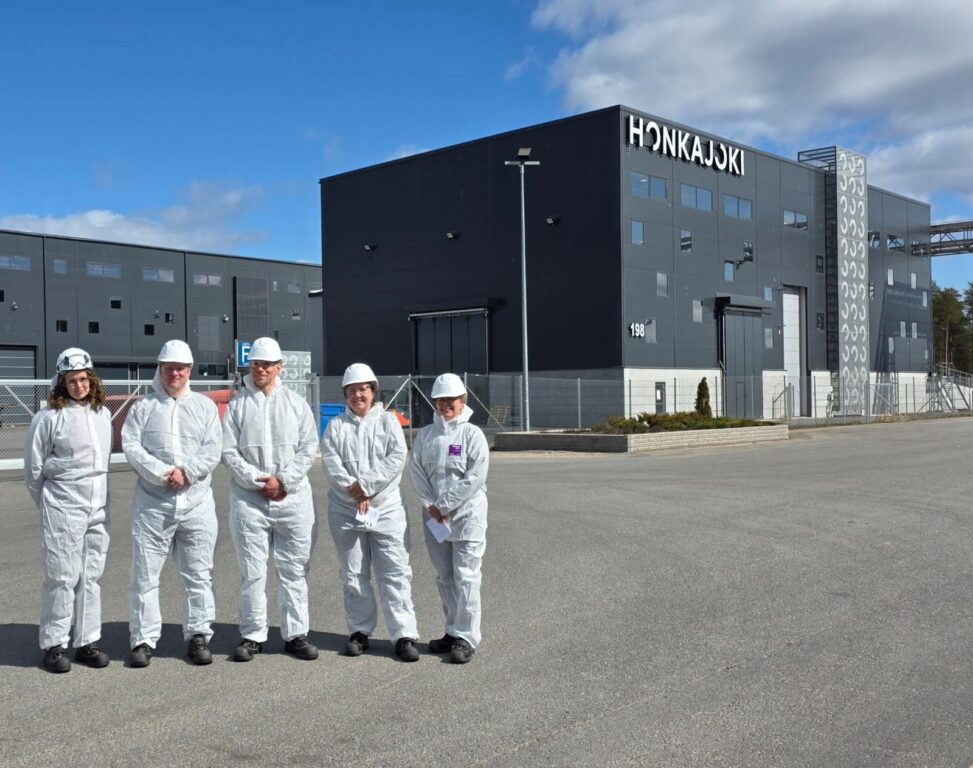
Tiina Sirkjärvi of Honkajoki Oy (left) hosted the Fennoaqua team of Kai Kanervala, Antti Hänninen, Marika Siivola, and Susanna Airaksinen during their audit visit to the new poultry plant in April 2026.
Honkajoki Oy renders, processes, recycles, and refines animal by-products for use in animal nutrition, fertilisers, energy production, and biofuels.
“We are part of the food production chain. We process any animal-derived products that are not intended for human consumption. We collect raw materials from abattoirs and process them for use in various industries, including animal feed, pet food, and biofuels,” says Reetta Nevala, Sustainability Director at Honkajoki.
Fennoaqua’s predecessor, Raisioaqua, pioneered the collaboration with Honkajoki shortly after the poultry line began production in 2017. Currently, Honkajoki supplies Fennoaqua with poultry meal, feather meal, and blood meal.
Responsible, consistent-quality, and domestically sourced raw materials
Founded in 1967, Honkajoki has based its operations on common sense from the very beginning: as long as people eat meat, it makes sense to utilise the entire animal. The business began by rendering fat and now continues on an industrial scale using modern technologies. This common-sense approach is still evident in Honkajoki’s mission: to develop a sustainable future. One of the company’s values is environmental friendliness, and it has published sustainability reports since 2017 – earlier than many other companies.
Honkajoki is owned by Atria and HK Foods, whose abattoir by-products are processed at Honkajoki’s plants.
“Thanks to our owners, we have a consistent supply of raw materials. We do not face competition for them, so quality variations are minimal. This is a significant advantage, even internationally,” says Sales Director Tiina Sirkjärvi.
Honkajoki’s production facilities are located in the company’s birthplace, Honkajoki, and in Kaustinen, and it also has offices in Tampere and Turku. Most of the production is sold in Finland, one-third goes to the EU and Norway, and the rest is exported to regions such as Asia.
Only raw materials in the lowest risk category are used in animal feed
Animal by-products are classified into risk categories under EU by-product legislation. Only the best, those in the lowest risk category, are supplied to the feed sector.
“We receive raw materials from abattoirs within 24 hours, often sooner. These animal parts are veterinarian-inspected and not suitable for human consumption. From these, we process poultry meal, feather meal, blood meal, and fat. We aim to maximise their use in animal feed, optimising nutritional value in line with the EU’s food use and waste hierarchy. The hierarchy states that by-products should be used in animal feed before any other industrial application,” Sirkjärvi emphasises.
Food trends are also reflected in the availability of raw materials
The volume of poultry products at Honkajoki has increased significantly in recent years due to rising consumer demand for chicken. The decline of the fur industry has also led abattoirs to supply more raw material that previously went to fur producers.
The company’s first poultry meal plant began operations in Honkajoki in 2017, followed by the feather meal line in 2023.
“When feathers are processed separately on their own line, they can be used as animal feed; otherwise, they are used for fertiliser. Proper processing increases feather meal digestibility to a high level: our fish farming trials show up to 90 per cent,” Sirkjärvi explains.
A second poultry meal plant began operations in early 2026. This facility can produce higher-value-added products, such as those that improve the stability of fish feed in water. Preliminary discussions with Fennoaqua have addressed testing this new product in feed.
Collaboration for fish welfare
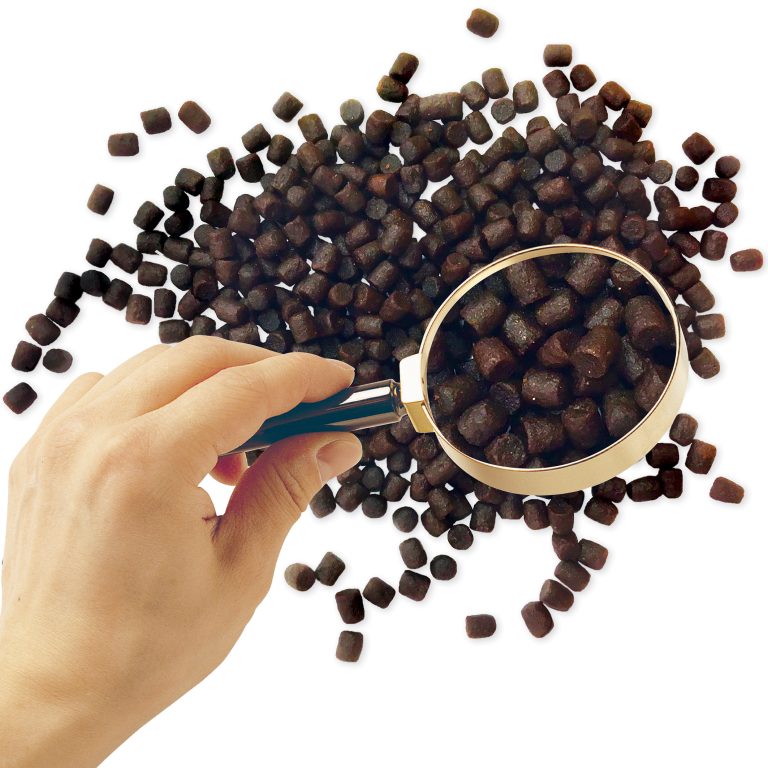
“Key aspects of our collaboration with Fennoaqua are sustainability, safety, and reliable supply. We carefully examine the products we provide, as Fennoaqua requires detailed information, such as the phosphorus content of our products,” says Sirkjärvi.
Fennoaqua is very satisfied with the collaboration.
“Our partnership with Honkajoki is long-term and flexible. We receive high-quality raw materials whenever we need them, and we can be confident of their consistent quality. A reliable partner like Honkajoki helps ensure that the quality of our products remains high,” emphasises Fennoaqua’s Procurement Manager Marika Siivola.
Previously, during the Raisioaqua era, digestibility tests with Honkajoki were conducted on rainbow trout, and results of recent studies have also been shared. There are further opportunities for research collaboration within the Alltech Group.
Honkajoki and Fennoaqua at the forefront of change
The global fish feed industry is undergoing changes.
“There have been more questions and demands regarding sustainability issues lately, which is a good thing. We’re also working on behalf of our customers, and sustainability measures provide clear added value,” Nevala states.
Fennoaqua has pioneered several areas, including the use of animal protein in fish feed. In Norway, for example, people are just now waking up to this.
“Fish meal has been used in fish feed because optimal recipes require it. This practice has faced criticism as wild fish stocks decline. Using poultry-based animal protein helps reduce dependence on fish meal from wild stocks,” Sirkjärvi notes.